
A pathway to college and companionship
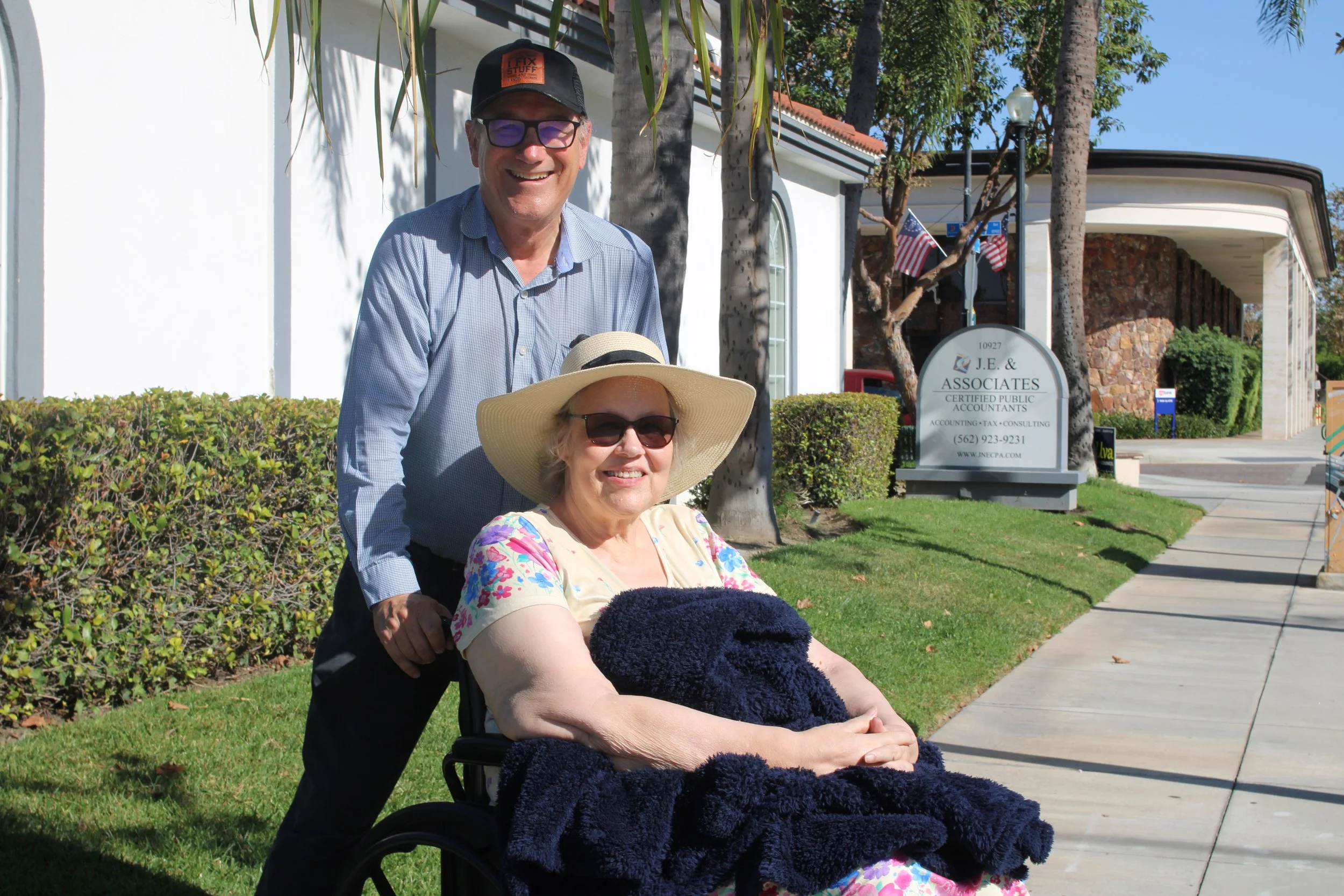
Roger Miller and his wife, Debbie. Drawing on his experience caring for Debbie, Miller is proposing an internship or scholarship program that would support young adults leaving foster care while providing older adults companionship and help at home.
DOWNEY – When Roger Miller was a young man attending Cerritos College and Cal State Long Beach, his mother gave him something that helped make his education possible: a place to call home while he figured out his future.
Decades later, he still thinks about that support — and about young adults leaving foster care who may have no one to offer it.
Now 72 and caring for his wife, Debbie, Miller also understands how much help an older person can need. He wonders whether the two generations could help each other.
The Downey native and local historian, known for his “Downey Then and Now” video series, is proposing an internship or scholarship program, or a combination of both, that would pair young adults leaving foster care with older adults who need companionship and everyday assistance.
Older adults could offer housing, meals and support for education. Young adults could help prepare meals, organize the household or accompany someone to an appointment while working toward a future of their own.
“I know firsthand what young people need, how they feel. I know firsthand what a senior needs,” he said.
For Miller, the idea brings together a concern he has carried for decades and a challenge that has recently changed his daily life.
His wife, Debbie, 75, developed serious cognitive problems last October. Miller said doctors initially believed she was experiencing delirium, but testing led to an Alzheimer’s diagnosis in June.
After she struggled to adjust to a care facility, he brought her home.
Although the couple has long-term care insurance, Miller said the private caregivers helping at home do not accept it. He worries about how long their savings and insurance benefits will last.
The experience has sharpened his awareness of the practical help people need to remain at home, as well as the comfort of having someone nearby.
Miller said he does not have family in the area and worries about eventually living alone. Another person in the house could offer company, but also notice a fall or a change in an older adult’s condition.
His concerns are shared by families across a country growing older.
The United States had 61.2 million residents age 65 and older in 2024, up 13% from 2020, according to the U.S. Census Bureau.
Meanwhile, a 2025 report by AARP and the National Alliance for Caregiving estimated that 63 million Americans, nearly one in four adults, provided ongoing care to an adult or a child with a complex medical condition or disability. About a quarter of caregivers were taking on debt because of their responsibilities.
Miller’s proposal would connect the need for support at home with the need for stability among young adults beginning life on their own.
He wants education to be central to the arrangement. Framing it as an internship, a scholarship program or a blend of the two would emphasize the opportunity for participants to learn, attend school and build independence.
A young adult could receive housing, meals, transportation assistance and help pursuing community college or other educational opportunities. Miller also envisions stipends and incentives tied to agreed-upon responsibilities and the length of the arrangement.
“My thought process is all around making sure that they have that pathway to independence,” he said.
His interest in young people leaving foster care began decades ago, when he considered what it would have taken to support himself at 18.
He had been able to remain with his mother while attending college. That gave him time and stability to move toward adulthood — advantages he knows other young people may lack.
Miller said he has had preliminary conversations with local government representatives and the president of Cerritos College about whether the concept could complement existing efforts to help students with housing needs.
The proposal remains exploratory. Its structure as an internship or scholarship program has not been established, nor have details about participant screening, training, oversight and the boundaries between household assistance and caregiving.
But Miller’s hope is straightforward: that the support his mother once gave him could inspire a program that helps another generation find its footing while giving older adults support of their own.
“I really see it as a win-win, and one hand washes the other,” he said.
Miller said he welcomes hearing from anyone interested in learning more about his idea. He can be reached at rogeravideo@gmail.com.