
Downey's first year as a city
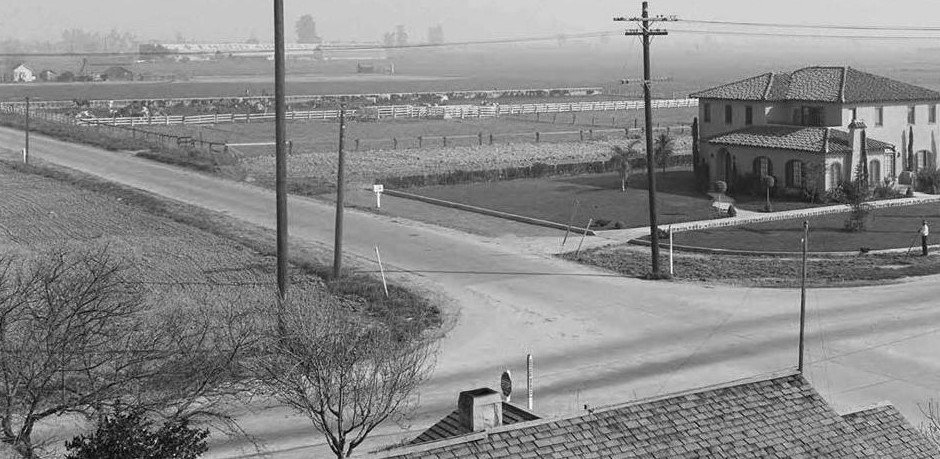
City of Downey photo
Editor’s Note: This article was written by former Downey City Councilman Scott E. Temple and is reproduced here courtesy of the Downey Historical Society.
On the morning of December 18, 1956, five men sat down to plan the future of a city. They were James L. Stamps, Hollis M. Peavey, Carroll M. Dunnum, Edwin W. Giddings and myself, the first City Council of the City of Downey, who had been elected the day before as a result of the incorporation election of the city of Downey.
Around them stood a community almost 100 years old, but which had grown up without the unifying influences of city incorporation. Many problems confronted the first City Council as they discussed how to proceed. Among these were a deteriorating downtown area, inadequate storm drainage which annually flooded Firestone Boulevard, inadequate street lighting and, most important of all, county services which were geared for rural living and in no sense sufficient for the demands of urban living.
The closest police service was the Norwalk Sheriff’s Station. Fire protection was afforded from only two locations: the present headquarters station near Firestone and Downey Avenue, and another fire station north of the freeway, near Lakewood. Citizens desiring building permits, zoning changes or other municipal services were required to journey to the Civic Center, where employees and boards were unfamiliar with the local conditions and aspirations of Downey.
The first actions of the new City Council were the selection of the Personnel Advisory Board to assist in the recruiting and selection of the City Manager and other top personnel. The members of the first board appointed were Chairman Bert DuMars, Charles Woodworth, Charles Wheeler, Norman Reams and Lee Gauldin.
Other boards required by state law or municipal ordinances were established as follows: Planning Commission: Henry Miner, Archie Fuller, Stephen Skinner Jr., Robert Ryan and Michael Kearns. Library Board: Merit Yancey, Mrs. Sidney Chapman, Dr. Joe Glenn Coss, Mrs. James Knox and Rev. Rodney Cogswell.
In addition, over 200 citizens, including many who had demonstrated an unusually high level of involvement in the incorporation campaign, were appointed to citizen advisory committees as follows: Traffic Committee, Civil Defense and Disaster Council, City Beautification Committee, Finance Advisory Committee, Fire Advisory Committee, Police Advisory Committee, Sanitation Committee and Youth Advisory Committee.
Committees established subsequently were: Park and Recreation Commission, Parking Place Commission, Water Board, Downey City Hospital Commission, Downey Community Hospital Authority, Legislative Study Committee, City Improvement Committee, Rose Float Committee and Sister City Committee.
The first actions of the City Council also included the establishment of the major city departments. The first city employee, local businesswoman Della Doyle, was recruited as the first city clerk, and Rudolph Wehking as the first city treasurer. After extensive screening and interviewing, the Personnel Advisory Board recommended and the City Council appointed Oren L. King as the first City Manager.
The Police Department was organized in the spring of 1957, with Ivan A. Robinson as chief, which included the highest standards of law enforcement and an original personnel of 61, selected from over 300 experienced applicants.
The Public Works Department was established, including planning, building inspection, engineering and street functions, with 11 employees. Planning and building later became separate departments.
The Fire Department was organized in September of 1957 with 55 personnel, six pumping engines, one rescue unit and three staff cars.
On February 1, 1958, the city established a municipal library and plans were begun for a library building.
The City Finance Department was organized in a unique manner for most California cities, following truly centralized criteria. All phases of budgeting, accounting, funding, billing, cashiering, purchasing, licensing and auditing were contained in this department, separated only by divisions which properly set forth a checks-and-balances system, with an independent audit reporting directly to the City Council.
The Water Department and Parks and Recreation Department were organized. City Council obtained a four-and-one-half-acre plot, including the 26,000-square-foot plant of the Downey Elementary School, for city hall.
Other early decisions included a comprehensive street-lighting program for the downtown area, as well as street lighting for residential areas as determined by residents; advanced planning and early construction of storm drains; and firm determination that rural county services would be replaced with a high level of efficient and effective municipal services performed by city personnel under local home rule control.
On December 4, 1957, the city observed its first anniversary with an open house attended by over 3,000 citizens, illustrating again the great interest in local government.
Looking forward to the future after their first year of municipal progress, the City Council and the citizens of Downey felt a justified sense of pride and accomplishment at the organizational pattern they had established for their city. A pattern that proved so workable and effective for Downey that it would later be formalized by an overwhelming vote of the people in a City Charter in 1965.