
Newsom signs three bills authored by Blanca Pacheco
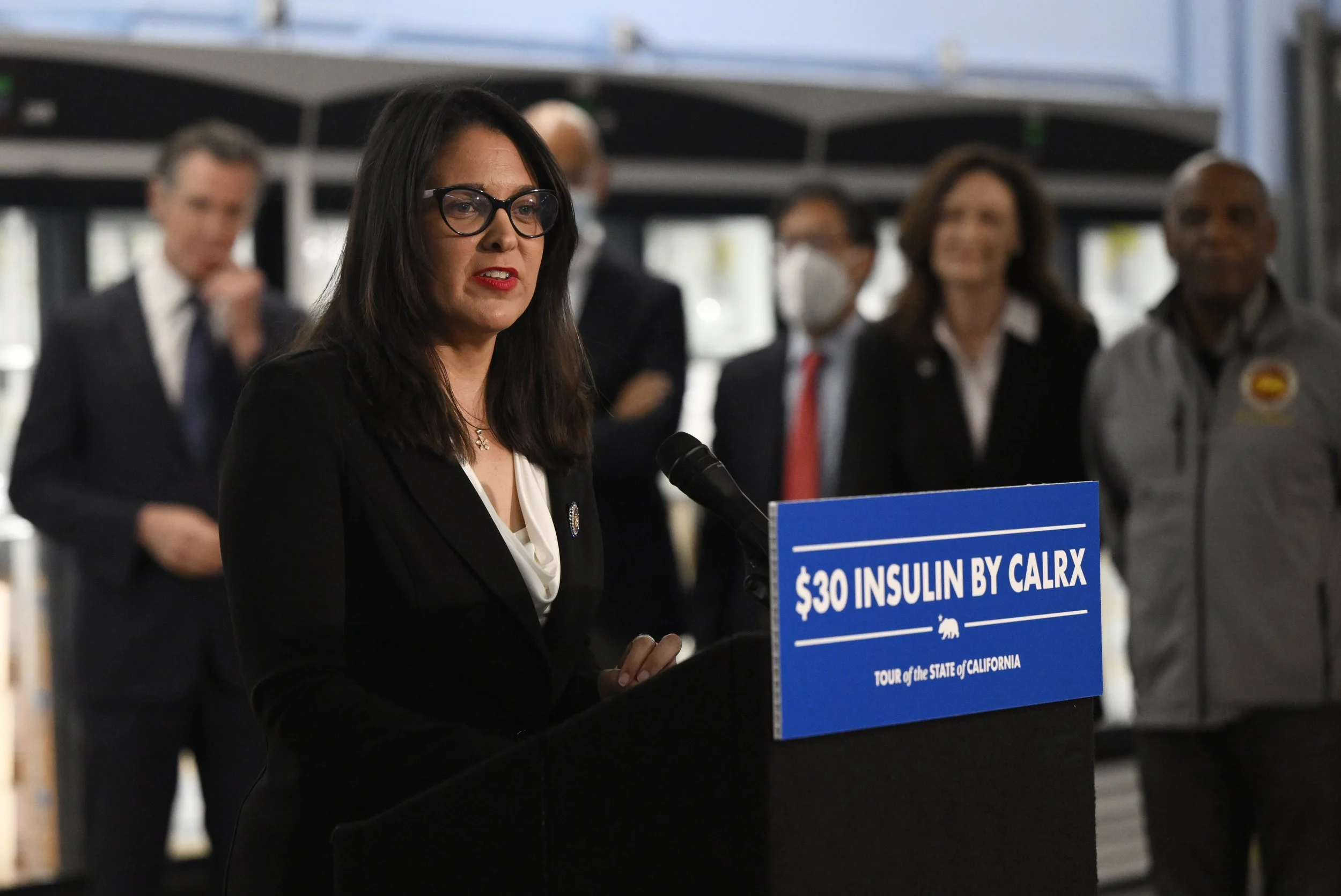
Assemblymember Blanca Pacheco speaks in Downey on March 23, 2023. (Photo by Keith Birmingham/MediaNews Group/Pasadena Star-News via Getty Images)
DOWNEY — Gov. Gavin Newsom has signed three bills authored by Assemblywoman Blanca Pacheco addressing college medical leave, the possible sale of Santa Fe Springs’ water system and penalties for sexual battery committed after entering a home without permission.
Newsom announced Sunday that he had signed Assembly Bills 1669, 1712 and 1741. Pacheco, a Downey Democrat, represents the 64th Assembly District.
AB 1669 will require public and private colleges and universities to establish policies allowing students to take voluntary medical leaves of absence for physical or mental health reasons.
Beginning with the 2027-28 academic year, students will be entitled to take medical leave for up to one academic year or for a longer period established by their school.
A leave may be extended when a physician or other medical provider determines it is medically necessary.
The law defines medical conditions to include anxiety, depression, eating disorders and substance-use disorders.
Students taking medical leave cannot be required to formally withdraw from their schools. Those who were in good academic standing before taking leave must be allowed to return to their programs in good standing and enroll in courses for which they previously qualified.
Colleges will be required to publish their leave policies online, distribute them during student orientation and email students and faculty at the beginning of each semester or term with information about where to find the policies.
Campus medical centers, registrar offices and administrative offices also must provide the policy to students seeking information about health-related leave or withdrawal.
The requirements will apply to California State University and community college campuses, along with private and independent colleges. They will apply to the University of California only if the UC Board of Regents adopts them.
AB 1712 gives Santa Fe Springs a temporary process for selling its municipally owned water utility and consolidating it with a neighboring public water system.
The legislation was requested as Santa Fe Springs confronted groundwater contamination and the need for costly infrastructure improvements. Supporters said consolidation with a larger provider could give the system access to a broader ratepayer base and more resources for upgrades.
The bill does not require Santa Fe Springs to sell its utility. Instead, it establishes conditions that would have to be met before a sale could proceed.
The City Council would need to determine that continued municipal ownership is not in the public interest and approve a sale by a four-fifths vote. The utility could not be sold for less than fair market value.
The city also would have to demonstrate that its water supply is contaminated, impaired or presents a public health risk and that the city lacks the capacity to make the necessary improvements, or that continued operation would place an unreasonable financial burden on ratepayers.
The acquiring water system would have to border the existing service area, maintain uninterrupted service and phase in any rate increases. Customers would be told what rate they would pay during the first year following consolidation.
Residents and ratepayers would have 45 days to protest a proposed sale. If at least 10% objected, the city would have to call an election and obtain approval from a majority of participating voters. If at least half protested, the sale could not move forward for at least one year.
The special authorization expires Jan. 1, 2032. AB 1712 passed both houses of the Legislature without opposition, including a 77-0 Assembly vote and a 40-0 Senate vote.
AB 1741 increases the potential punishment for sexual battery committed by someone who entered an occupied home, trailer or another inhabited portion of a building without consent.
Under existing law, sexual battery involving nonconsensual touching for sexual arousal, gratification or abuse generally is a misdemeanor punishable by up to six months in county jail and a fine of up to $2,000.
Under the new law, when the offense follows an unauthorized entry into an inhabited residence or building, prosecutors may charge it as either a misdemeanor or felony. A misdemeanor conviction may carry up to one year in county jail and a fine of up to $5,000. A felony conviction may result in two, three or four years in state prison and a fine of up to $10,000.
The legislation was intended to close a gap in state law by giving prosecutors and judges greater discretion when sexual battery occurs during a residential intrusion. It does not change the underlying definition of sexual battery.
AB 1741 also received no opposing votes in the Legislature, passing the Senate 40-0 before the Assembly concurred in amendments on a 75-0 vote.