
Downey approves license plate reader expansion
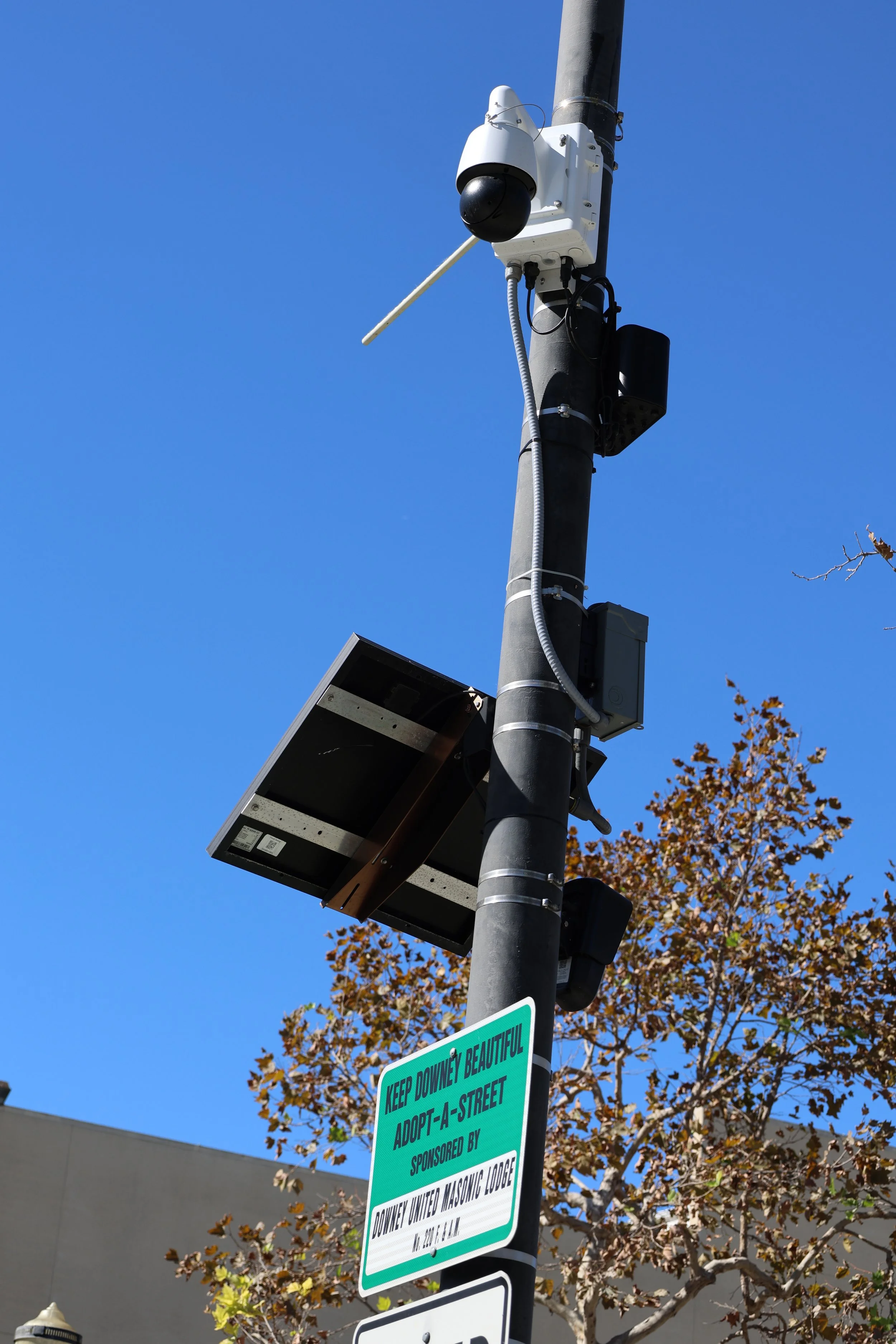
A security camera in downtown Downey, where an existing eight-camera system remains operational. The City Council on Tuesday approved a separate $532,026 agreement to replace and expand the Police Department’s license plate reader system at 23 locations citywide. (Photo by Eric Pierce)
DOWNEY – The City Council on Tuesday approved a five-year, $532,026 agreement to replace and expand the Police Department’s automated license plate reader system. The vote was 4-0, with Councilman Hector Sosa absent.
The Motorola Solutions system will cover 23 locations, including 13 existing sites and 10 additional locations. The department says the upgrade will replace aging equipment and improve coverage across the city.
Some cameras will use solar power and wireless data transmission to reduce reliance on wiring that can be damaged during utility work or stolen.
Downey has used license plate readers for more than 10 years to identify vehicles connected to criminal activity, locate stolen or wanted vehicles and assist investigations, officials said.
The Police Department says the cameras have helped recover more than 1,450 stolen or wanted vehicles and contributed to more than 950 arrests.
The oldest cameras, installed at three intersections in 2015-16, no longer work and cannot be repaired because their manufacturer is no longer in business. Ten cameras installed the following year are nearing the end of their service life.
A separate system of eight cameras in the downtown area, installed in 2023-24, remains operational and has one year left on its agreement, which could be extended.
The department sought proposals from Motorola, Flock Safety and Axon. It recommended Motorola, citing its more than 10 years of experience with the company’s Vigilant platform, existing system access and notifications, and investigators’ familiarity with the software.
Staying with Motorola will also preserve access to historical data without buying a separate subscription, according to the staff report.
The proposals differed in scope and contract terms. Flock’s quote for 18 cameras listed a first-year cost of $78,700 and a recurring annual cost of $76,000; its quote for 28 cameras totaled $220,200 over two years. Axon proposed 18 cameras for $269,910 over five years.
The approved Motorola agreement will be paid in five annual installments of about $106,405. The city will own the camera equipment at the end of the five-year term but will continue paying for access to Motorola’s software and license plate database.
The first-year payment is included in the adopted 2026-27 General Fund budget.
The staff report says the department follows state law and its own policy on access to and sharing of license plate data.
It says data is not shared with federal agencies or law enforcement agencies outside California, and the department conducts annual audits of the program.